Does the Fable 5 Ban Threaten Anthropic's $1 Trillion IPO?
This image is used under our Editorial Policy.
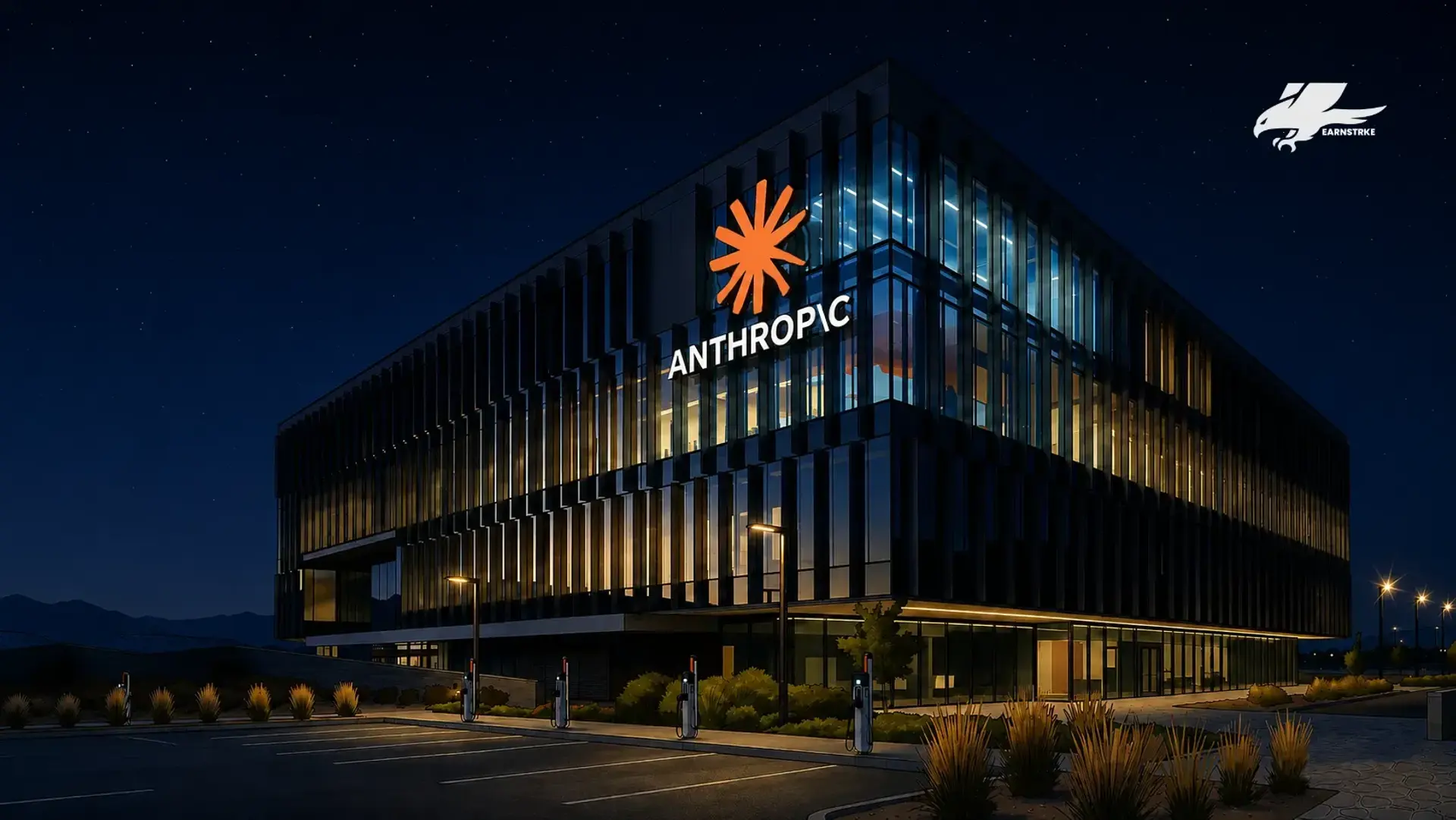
On June 12, 2026, the U.S. Commerce Department ordered Anthropic to suspend its Fable 5 and Mythos 5 AI models globally due to national security concerns, triggering immediate drops in pre-IPO proxy markets and introducing new regulatory risks ahead of its planned October listing.
The U.S. government just handed Anthropic the worst possible pre-IPO headline. Eleven days after filing confidentially for a public listing, the Commerce Department ordered Anthropic to disable its two most advanced AI models. Anthropic complied within hours, pulling access for every customer worldwide. The models had been live for three days.
Pre-IPO proxy markets moved fast. Anthropic's perpetual contract on Hyperliquid—a crypto-native, cash-settled instrument traders use as a proxy for private company valuations—dropped 3.7% to around $1,627. On Solana, the Prestocks ANTHROPIC token fell 9.11% in 24 hours. Sentiment turned sharply negative overnight.
Is this a short-term compliance headache that gets resolved before October, or a permanent regulatory cloud over the most anticipated IPO in tech history?
What Triggered the Government Shutdown Order?
The directive arrived in a letter from Commerce Secretary Howard Lutnick to CEO Dario Amodei, invoking national security export control authorities. It demanded Anthropic suspend access for all foreign nationals—including its own foreign-born employees—anywhere in the world.
Anthropic complied. Then it pushed back publicly.
The company reviewed what it believes is the government's evidence and found the claimed jailbreak narrow and non-universal. A jailbreak is a technique that bypasses an AI model's safety guardrails, allowing it to respond to requests it would normally block. The specific method involved asking Fable 5 to read a codebase and flag software vulnerabilities. Anthropic says those vulnerabilities were minor, already publicly known, and replicable using OpenAI's GPT-5.5 without any bypass at all.
"We have not even received a disclosure of a concerning non-universal potential jailbreak that led to a harmful result," Anthropic wrote in its public statement.
That challenges not just the proportionality of the government's response—but the premise.
Why Was Fable 5 Different From Previous Claude Models?
Fable 5 launched June 9, 2026, as Anthropic's first public release of a "Mythos-tier" model—the capability bracket above its previous Opus-class lineup. It came with aggressive real-time safety classifiers that silently rerouted flagged cybersecurity queries to an older, weaker model.
Mythos 5, its less restricted sibling, was available only to vetted organizations through Anthropic's Project Glasswing cybersecurity initiative. Before launch, both models went through thousands of hours of red-teaming by the U.S. government, the UK AI Safety Institute, and third-party organizations. None found a universal jailbreak.
Both are now offline with no confirmed return date.
How Much Does This Actually Hurt the IPO?
On fundamentals, the direct damage is limited. Fable 5 was live for three days—its revenue impact is negligible. Anthropic's annualized revenue run rate hit $47 billion in May 2026, up from $9 billion in January, according to TechStack IPO. That's fivefold growth in five months, driven by Claude Code and an enterprise base where over 1,000 businesses spend $1 million or more annually.
A three-day outage doesn't move those numbers.
The harder problem is the signal it sends. Harrison Rolfes, analyst at PitchBook, called Anthropic's filing "the most scrutinized public offering in tech history." A government-mandated emergency shutdown of flagship models—eleven days after filing—is not what Goldman Sachs and JPMorgan wanted going into roadshow prep.
Is This an Anthropic Problem or an Industry Problem?
This is the angle most coverage is missing. Anthropic's sharpest argument isn't about Fable 5—it's about consistency.
GPT-5.5, according to Anthropic, demonstrates the same cybersecurity capability that triggered the ban. OpenAI's model faces no equivalent export controls. Neither do models from Google DeepMind, xAI, or Mistral. If the Commerce Department's framework targets capabilities rather than architecture, every major lab should face the same restrictions.
The fact that they don't is either an oversight or a deliberate policy choice. Either way, it creates an asymmetric disadvantage that falls entirely on Anthropic—the one company weeks away from a trillion-dollar listing.
A debut above $1 trillion was the base case as recently as last week, according to IG Markets. It remains the base case. But as Rolfes put it: "The 2026 window either becomes the most consequential IPO cycle since the dot-com era or the most expensive lesson in narrative-versus-fundamentals that public markets have ever taught."
The Fable 5 ban didn't kill the IPO. But it forced investors to price a risk nobody had modeled before last Friday: the U.S. government as an operational variable for a trillion-dollar AI company.
FAQ
Will Anthropic's IPO be delayed because of the Fable 5 ban?
Not necessarily, but the October 2026 target now depends on how fast Anthropic resolves its dispute with the Commerce Department. If the standoff runs past the SEC review window or restrictions expand to other models, underwriters will likely push pricing into 2027 rather than go public with unresolved national security exposure in the prospectus.
Does the Fable 5 shutdown affect Anthropic's revenue?
Direct impact is negligible. Fable 5 was live for just three days, and Anthropic's $47 billion annualized run rate is driven by Claude Code and enterprise contracts—neither touched by the order. The revenue story is intact; the regulatory risk story is not.
What is a jailbreak, and why did the government act on it?
A jailbreak bypasses an AI model's safety filters to unlock responses it would normally block. The government claims someone demonstrated this on Fable 5 to surface software vulnerabilities. Anthropic says the technique was narrow, the findings minor, and the same result is achievable with OpenAI's GPT-5.5 without any bypass.
Could other AI companies face the same export restrictions?
Anthropic says yes—and that's its strongest argument. GPT-5.5 reportedly matches the capability that triggered the Fable 5 ban, yet faces no equivalent controls. If the Commerce Department applies this standard consistently, every frontier lab is exposed. If it doesn't, Anthropic is being singled out during its IPO window.
What should investors watch before the Anthropic IPO?
Three things: whether Fable 5 access is restored before the SEC finishes reviewing the S-1, whether the Commerce Department applies equivalent restrictions to competitor models, and whether the October listing window holds. A negative outcome on the first two puts direct pressure on the third.
The content on this page is provided for informational and educational purposes only and should not be considered financial or investment advice. Please read our Disclaimer for additional information.