Meta Bets Big on AI Chips While Facing $1.4T Lawsuit
This image is used under our Editorial Policy.
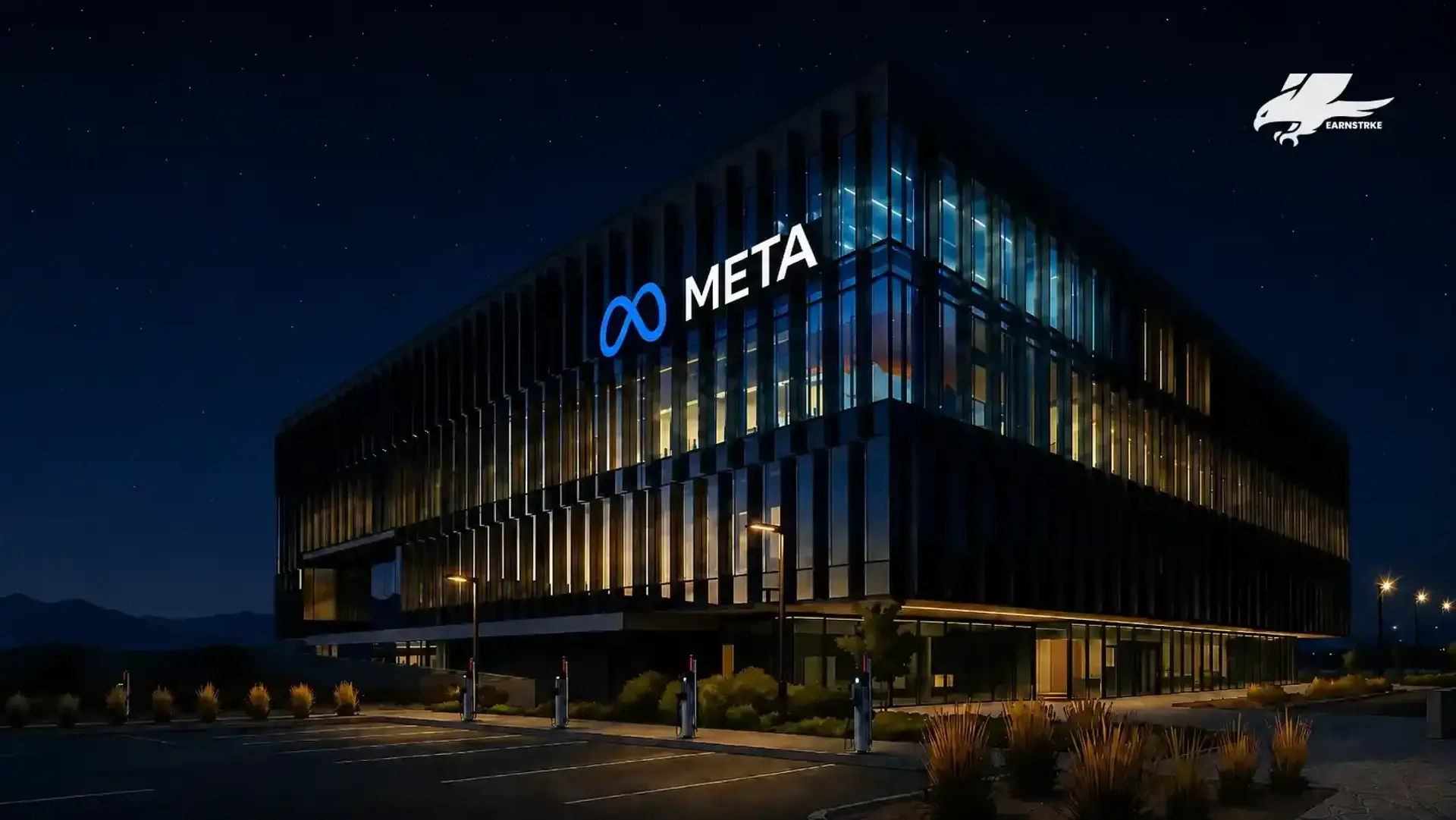
Meta rolled out its first paid AI model for developers this week and confirmed plans to double its computing capacity to 14 gigawatts by 2027, even as the company disclosed it could face $1.4 trillion in penalties from four states suing over claims it engineered Facebook and Instagram to addict young users.
Two stories, one company, one week. Meta is spending big to win the AI race against giants like Claude and OpenAI while defending against the largest potential penalty in corporate history.
What Is Meta's New Paid AI Model?
The new model, called Muse Spark 1.1, marks the first time Meta has charged developers for access to one of its AI systems. Pricing sits at $1.25 per million input tokens and $4.25 per million output tokens, roughly a quarter of what rivals charge for comparable models.
Zuckerberg says the model beats Google's Gemini on benchmarks tied to coding, agentic workflows, and multimodal reasoning. Meta staff have already used it to build features across the company's apps.
- Pricing: about 25% of what competing AI labs charge for similar models
- Use case: coding, debugging, document analysis, and multi-step agent tasks
- Strategy shift: a pivot from Meta's open-source Llama models toward a paid, closed API
The launch fits a wider pattern. Every major AI lab is racing to cut prices while claiming performance gains, and Meta wants developers building on its stack instead of a rival's.
Why Is Meta Doubling Its Compute Capacity?
Meta plans to lift its total data-center capacity from 7 gigawatts this year to 14 gigawatts in 2027. That expansion sits alongside a custom chip effort, code-named Iris, set to enter production in September.
Iris is part of Meta's in-house chip program, built with design help from a chip partner and manufactured by a leading Taiwanese foundry. The goal isn't to replace Nvidia or AMD outright, but to cut costs and reduce dependence on outside chip suppliers for everyday workloads like ranking feeds and running recommendation engines.
- Compute target: 14 gigawatts by 2027, double this year's capacity
- Chip production: Iris begins manufacturing in September, part of a four-generation roadmap
- Spending: up to $145 billion earmarked for AI infrastructure this year
Meta has also locked in supply deals for memory and flash storage to protect itself against a tightening chip market. Custom silicon and secured supply chains go hand in hand here — the chip shortage makes locked-in parts almost as valuable as the chip designs themselves.
What's the $1.4 Trillion Lawsuit About?
Four states — California, Colorado, Kentucky, and New Jersey — are suing Meta over claims that Facebook and Instagram were built with features designed to hook young users, and that the company misled the public about the risks. Meta disclosed the $1.4 trillion figure itself, in a court filing responding to the states' request on how penalties should be calculated.
The number is almost exactly Meta's entire market value. A trial is set to begin next month in federal court in Oakland. Meta's lawyers pushed back hard on the figure in their filing, arguing that a penalty of that scale has no precedent in consumer protection enforcement.
- Penalty sought: up to $1.4 trillion, close to Meta's roughly $1.5 trillion market cap
- Plaintiffs: California, Colorado, Kentucky, and New Jersey
- Precedent: a separate case already delivered a $375 million verdict against Meta earlier this year
The core claims center on features like infinite scroll, push notifications engineered to create urgency, and ranking algorithms that optimize for engagement over user wellbeing. Whatever the trial's outcome, legal analysts see the final number likely landing far below the headline figure — but even a fraction of $1.4 trillion would be a historic penalty.
The Real Tension Behind Meta's Two Headlines
Most coverage treats Meta's AI push and its legal exposure as separate storylines: one about growth, one about risk. But they're tied together more tightly than that framing suggests. Meta's entire AI bet — the paid model, the custom chips, the $145 billion in spending — depends on convincing investors the company can keep growing engagement and revenue for years to come. A trillion-dollar penalty tied directly to the mechanics of that engagement, the very features regulators say were built to keep users hooked, cuts straight at the foundation the AI strategy is being built on. If courts force Meta to redesign core product features like infinite scroll or algorithmic ranking, the company may end up rebuilding parts of the same engagement engine its AI models are meant to power. The chip investment and the courtroom fight aren't competing headlines — they're both bets on how long Meta's current product model can keep working.
Stock investments involve market risk and price fluctuations. This content is for informational purposes only and should not be considered investment advice. Please read our Disclaimer for more information.