SK Hynix's $28B IPO Draws Huge Demand Despite Korea Slump
This image is used under our Editorial Policy.
SK Hynix priced a $28 billion Nasdaq listing that drew orders for more than seven times the shares on offer, even as its home market lost roughly a quarter of its value in a month, exposing a split between global institutional confidence in the chipmaker and a domestic Korean market buckling under retail leverage.
That split is the story here. Wall Street is racing into SK Hynix. Seoul is running from it.
Why Is SK Hynix's IPO Getting So Much Demand?
SK Hynix is selling 177.9 million ADRs on the Nasdaq Global Select Market under the ticker SKHY. The offer pulled in orders from long-only funds, sovereign wealth funds, and Asia-focused institutions, according to Bloomberg. Three cornerstone investors — Baillie Gifford, Coatue Management, and Situational Awareness Partners — committed up to $7 billion combined, roughly a quarter of the entire deal.
The appeal comes down to one number. SK Hynix controls close to 57% of global high-bandwidth memory revenue, based on Counterpoint Research data cited by Bloomberg. HBM chips sit inside nearly every AI accelerator shipping today, and that demand shows no sign of cooling.
- Deal size: $26.5 billion, one of the largest foreign listings ever on a U.S. exchange
- Oversubscription: more than 7 times the shares on offer, according to Reuters
- Valuation gap: SK Hynix trades at 5.5 times forward earnings versus 6.66 times for Micron Technology, its closest U.S. rival
That valuation gap is really the trade. Investors are betting the Nasdaq listing puts SK Hynix in front of U.S. index funds and analysts who rarely touch Korean equities, narrowing the discount to Micron over time.
What's Actually Wrong With the Korean Stock Market?
Back home, the picture looks very different. The KOSPI has fallen roughly 24% from its all-time high over the past month, tipping the index into a bear market. Samsung Electronics and SK Hynix, along with ETFs built around them, now account for close to 70% of all KOSPI trading — a level of concentration rarely seen in a market this size.
Bank of Korea data backs this up from another angle. The combined market-cap share of the two chipmakers jumped from 36.1% at the end of 2025 to 55.3% by late June. Their share of trading value climbed even faster, from 27.9% to 63.5% over the same window.
How Do Leveraged ETFs Turn a Dip Into a Crash?
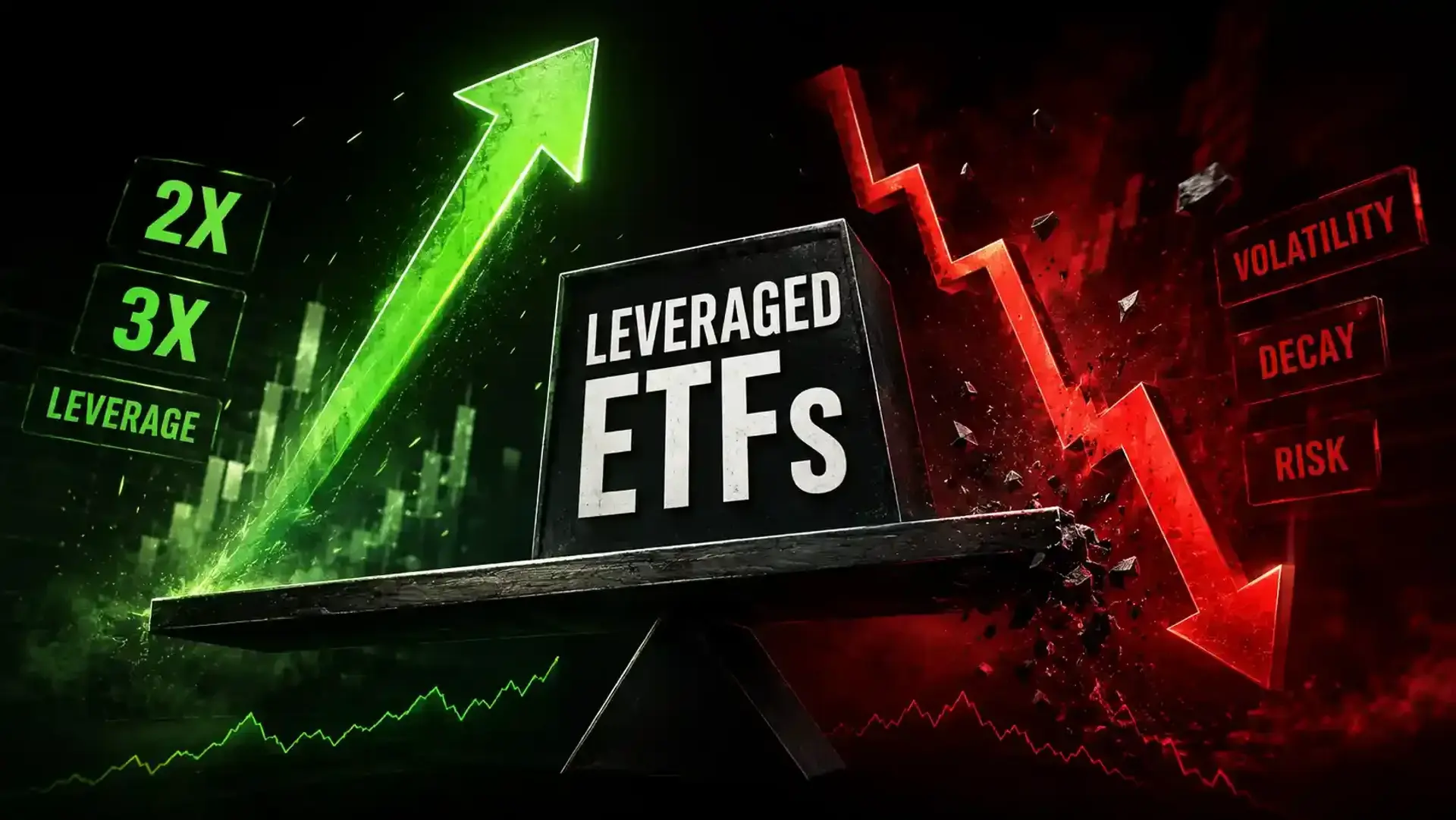
South Korea approved single-stock 2x leveraged ETFs tied to the two chipmakers in late May 2026, and retail traders — known locally as "ants" — piled in almost overnight. Assets in these products jumped from around 4.5 trillion won to 14 trillion won in under a month. Roughly 92% of holders are individual investors, not institutions.
The mechanics make ordinary volatility worse. Fund managers running a 2x product have to buy more shares when the stock climbs to hold their leverage ratio, then sell when it drops. That forced buying and selling turns a routine dip into a steeper one.
- Leveraged ETF trading makes up roughly 31% of Samsung's daily volume and about 38% of SK Hynix's, per industry estimates
- During the recent selloff, leveraged funds reportedly sold about $6 billion worth of Samsung and SK Hynix shares
- Margin loan balances hit a quarterly record of 35.94 trillion won, or about $23.5 billion, in the second quarter, according to the Bank of Korea
Mike Bailey, director of research at FBB Capital Partners, told CNBC that expectations had outrun the fundamentals, adding that he'd expect the current rotation out of the sector to keep going.
What Are Regulators Doing About It?
South Korea's Financial Supervisory Service and the Bank of Korea have both raised the alarm publicly. FSS Governor Lee Chan-jin said on June 22 that the ETFs were approved too quickly. The Bank of Korea has warned the products could act as a volatility amplifier, and at least one opposition lawmaker has called for them to be delisted outright.
Delisting isn't straightforward, though. Korea Exchange rules tie delisting to weak trading or thin assets, and these funds have plenty of both trading and assets — that's precisely what makes them dangerous. Regulators are focused instead on raising entry barriers and briefing asset managers on ways to cool activity, according to the Korea Herald.
The Angle Most Coverage Is Missing
Most reporting treats the Nasdaq listing and the KOSPI's leverage problem as two separate stories. They're not. Every dollar that flows into SK Hynix's U.S.-listed ADRs is a dollar that isn't chasing a 2x leveraged ETF back in Seoul. A strong Nasdaq debut gives global capital a second, calmer route into the company — one without daily rebalancing, without the feedback loop, and without the retail concentration that's been driving 3-5% daily swings in the KOSPI. If the listing performs well, it could do more to cool Korea's leverage problem than any regulatory rule under discussion right now, simply by giving investors somewhere else to put their conviction.
The content on this page is provided for informational and educational purposes only and should not be considered financial or investment advice. Please read our Disclaimer for additional information.