What Drives Today's Market Swings? Inflation? Rate Hikes?
This image is used under our Editorial Policy.
On June 25, 2026, the S&P 500 swung through a $2 trillion range in under 70 minutes after PCE inflation hit 4.1%, its highest reading since April 2023, and Apple announced price increases of up to 25% on select Mac and iPad products, citing rising AI-driven component costs.
Today's session is being driven by two data points landing at almost the same time, both pointing in the same direction for different reasons. The result is a market that opened higher, reversed sharply, then partially recovered — all before most people finished their morning coffee.
What Caused the Sharp Intraday Swing Today?
The sequence matters here. At 8:30 AM ET, the PCE Price Index — the Federal Reserve's preferred inflation gauge — printed at 4.1% year over year for May, up from 3.8% the prior month and more than double the Fed's 2% target. Futures were actually higher after that print, suggesting markets had partially priced in a hot number.
Then Apple announced it was raising prices on select Mac and iPad products by up to 25%, with CEO Tim Cook citing surging chip and component costs tied to AI demand as unavoidable. Apple shares fell roughly 4% to 6% in early trading, erasing between $150 billion and $220 billion in market cap in minutes. That Apple move, not the PCE data, appears to have triggered the broader selling that followed.
The S&P 500 opened up 0.83% adding roughly $560 billion, then reversed to fall 1.27% within 30 minutes, wiping out approximately $860 billion. It has since recovered a meaningful portion of those losses. The Nasdaq saw a sharper version of the same pattern: up 0.94% at the open, then down as much as 2.29% to 3.5% within 27 minutes, a decline of close to 1,000 points on the Nasdaq 100, before buyers stepped back in.
Why Are Tech and the Dow Moving in Opposite Directions?
This is the cleanest story of the day. While the Nasdaq struggled with intraday swings, the Dow Jones Industrial Average is up approximately 1.50% and the Russell 2000 is up around 1.44%, with both sitting near all-time highs. The Dow has added roughly $340 billion in value.
The rotation logic is straightforward. Higher interest rates hurt growth stocks more than any other category, because growth stocks are valued primarily on future earnings — and when borrowing costs rise, those future earnings are worth less in today's dollars. Tech and AI names carry the most exposure to that dynamic.
The Dow, by contrast, is weighted toward industrial, healthcare, and financial companies with steadier near-term earnings and dividends. When rates look like they're staying higher for longer, capital tends to rotate toward those names. That's exactly what today's session looks like in real time: money moving out of high-multiple tech and into defensive, earnings-heavy industrials and financials.
Micron is the notable exception on the tech side. The memory chipmaker reported blowout earnings after Tuesday's close, posting fiscal third-quarter results well above consensus estimates on strong AI data center demand, and its shares are up roughly 12% to 16% today, dragging SanDisk and other memory names higher with it.
What Does the PCE Data Actually Mean for the Fed?
The inflation picture heading into today's data was already complicated. Now it's more so.
The full data set from this morning:
- PCE Price Index: 4.1% year over year in May, up from 3.8%, highest since April 2023
- Q1 GDP final estimate: 2.1%, well above the 1.6% forecast
- Initial jobless claims: 215,000, better than the 225,000 expected
- Personal spending: up 0.7% in May, above the 0.6% forecast
- Core durable goods orders: up 1.3%
- Headline durable goods orders: down 4.5%, reversing an 8.5% gain the prior month
Strong growth, tight labor market, rising consumer spending, and inflation still well above target. That combination gives the Fed almost no case for cutting rates. Kevin Warsh, who ran his first FOMC meeting just days ago and signaled openness to further rate hikes, now has data that reinforces that position heading into the next meeting.
Bank of America cut its euro forecasts in a note this week and now expects a stronger U.S. dollar in the second half of 2026, citing the combination of resilient U.S. growth data and a hawkish Fed. The bank sees EUR/USD ending Q3 at 1.12 and the full year at 1.15. Markets are still pricing in at least one additional Fed rate hike this year, with rates expected to remain elevated into 2027.
What Is "AI-Flation" and Why Does It Matter?
Apple's price announcement introduced a term worth understanding: AI-flation, the phenomenon where AI-driven demand for components pushes up the cost of consumer hardware.
Apple raised prices on the MacBook Neo from $599 to $699, a roughly $100 increase, and on the M3 Ultra Mac Studio from $3,999 to $5,299, a $1,300 jump. The company's explanation — that soaring chip costs tied to AI demand made the hike unavoidable — is essentially a direct pass-through of the AI infrastructure buildout cost to retail consumers. That's a new kind of inflation pressure the Fed's models weren't built around, and it's showing up in the PCE data at the same time.
What's the Angle Most Coverage Is Missing?
Today's session is being framed as a tech selloff caused by inflation data. The more precise read is that it's a leverage unwind triggered by a corporate pricing announcement, amplified by a market that has accumulated an unusually large amount of concentrated risk in a small number of positions.
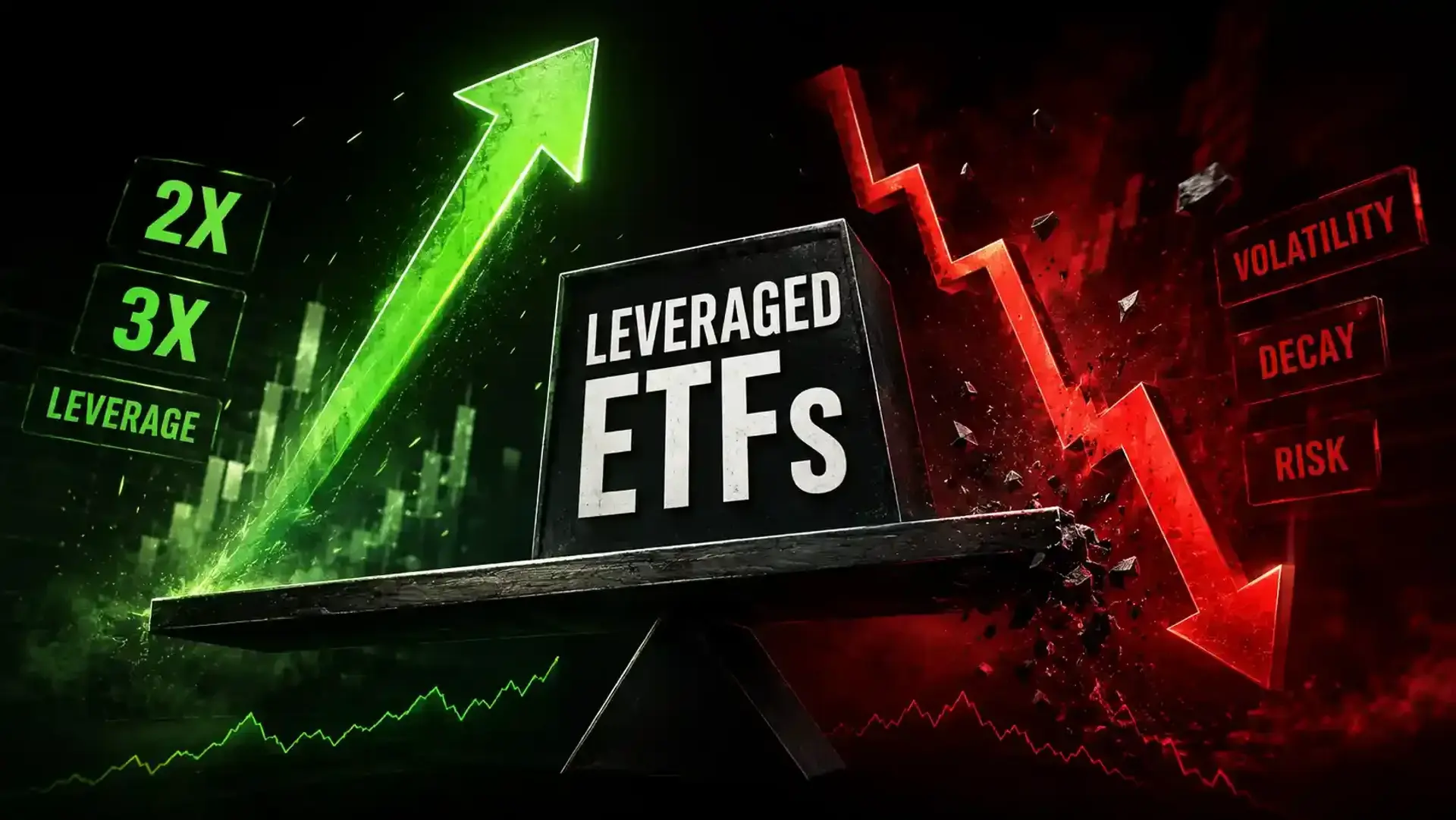
Leveraged ETF assets have grown substantially in 2026: AUM in a single 3x leveraged Nasdaq 100 ETF has reached approximately $40 billion, while the 3x leveraged semiconductor ETF SOXL sits at a record $34 billion. Both figures are up 200% to 300% since April alone. Total leveraged ETF AUM has surged roughly 490% year to date. When a single large-cap stock like Apple moves 5% to 6% on a surprise pricing announcement, it doesn't just affect Apple holders. It triggers stop-losses and margin requirements across levered positions that were built on assumptions of continued low volatility. The $500 million in crypto liquidations that occurred during the same 60-minute window, sending Bitcoin briefly toward $58,000, is the same dynamic playing out across a different asset class simultaneously.
FAQ
Why did the market swing so sharply on June 25, 2026?
Two simultaneous catalysts drove the intraday volatility: the PCE inflation reading came in at 4.1%, the highest since April 2023, and Apple announced price increases of up to 25% on select Mac products, citing rising AI component costs. Apple's announcement triggered broad selling in tech stocks, which then partially reversed as buyers stepped in at lower prices.
What is the PCE Price Index and why does the Fed use it?
The PCE, or Personal Consumption Expenditures Price Index, measures the change in prices paid by U.S. consumers across a broad range of goods and services. The Fed prefers it over the CPI because it adjusts for changes in consumer behavior, giving a smoother picture of underlying inflation. May's reading of 4.1% is more than double the Fed's 2% target.
Why are the Dow and Russell 2000 rising while Nasdaq falls?
The divergence reflects a rotation from growth stocks to value and defensive stocks. Higher interest rates reduce the present value of future earnings, which hits tech and AI companies hardest since they trade on long-duration earnings expectations. The Dow's industrial, healthcare, and financial components have steadier near-term earnings and dividends, making them more attractive when rates stay elevated.
What is AI-flation?
AI-flation refers to consumer price increases caused by surging demand for AI-related components pushing up hardware costs. Apple's June 25 announcement illustrated the concept directly: the company raised Mac and iPad prices by up to 25%, citing rising memory and chip costs driven by AI infrastructure demand, and said the increases were unavoidable given current component pricing.
What does today's economic data mean for Fed rate cuts?
The combination of 4.1% PCE inflation, 2.1% GDP growth, a tight labor market, and strong consumer spending gives the Fed little justification to cut rates. Markets are pricing in at least one additional rate hike this year, with rates expected to remain elevated into 2027. Fed Chair Kevin Warsh had already signaled openness to hikes before today's data reinforced that case.
The content on this page is provided for informational and educational purposes only and should not be considered financial or investment advice. Please read our Disclaimer for additional information.