Inside Nokia's $4 Billion Photonics Infrastructure Push
This image is used under our Editorial Policy.
Nokia is expanding its Allentown, Pennsylvania photonic chip facility tenfold while simultaneously upgrading a Southeast Asian subsea cable system, two separate June 2026 announcements that both feed the same $4 billion bet on becoming critical infrastructure for AI data center networking.
Everyone's chasing GPU makers. Nokia is going after something less flashy and arguably more durable: the pipes that move data between the chips. Two announcements landed close together this month, and read separately they look like routine corporate news. Read together, they're a pattern.
What Did Nokia Actually Announce?
Start with the easy one. Nokia is upgrading Symphony Communication's MCT subsea network, the underwater fiber-optic cable system connecting Thailand, Malaysia, and Singapore. In plain terms, Nokia was hired to make the cables that carry internet traffic between those three countries faster and cheaper to run.
The upgrade triples data capacity across that route. It also cuts power consumption by 60%. For a region with some of the fastest-growing data center demand in Asia, that's not a cosmetic improvement. It's capacity that didn't exist last month.
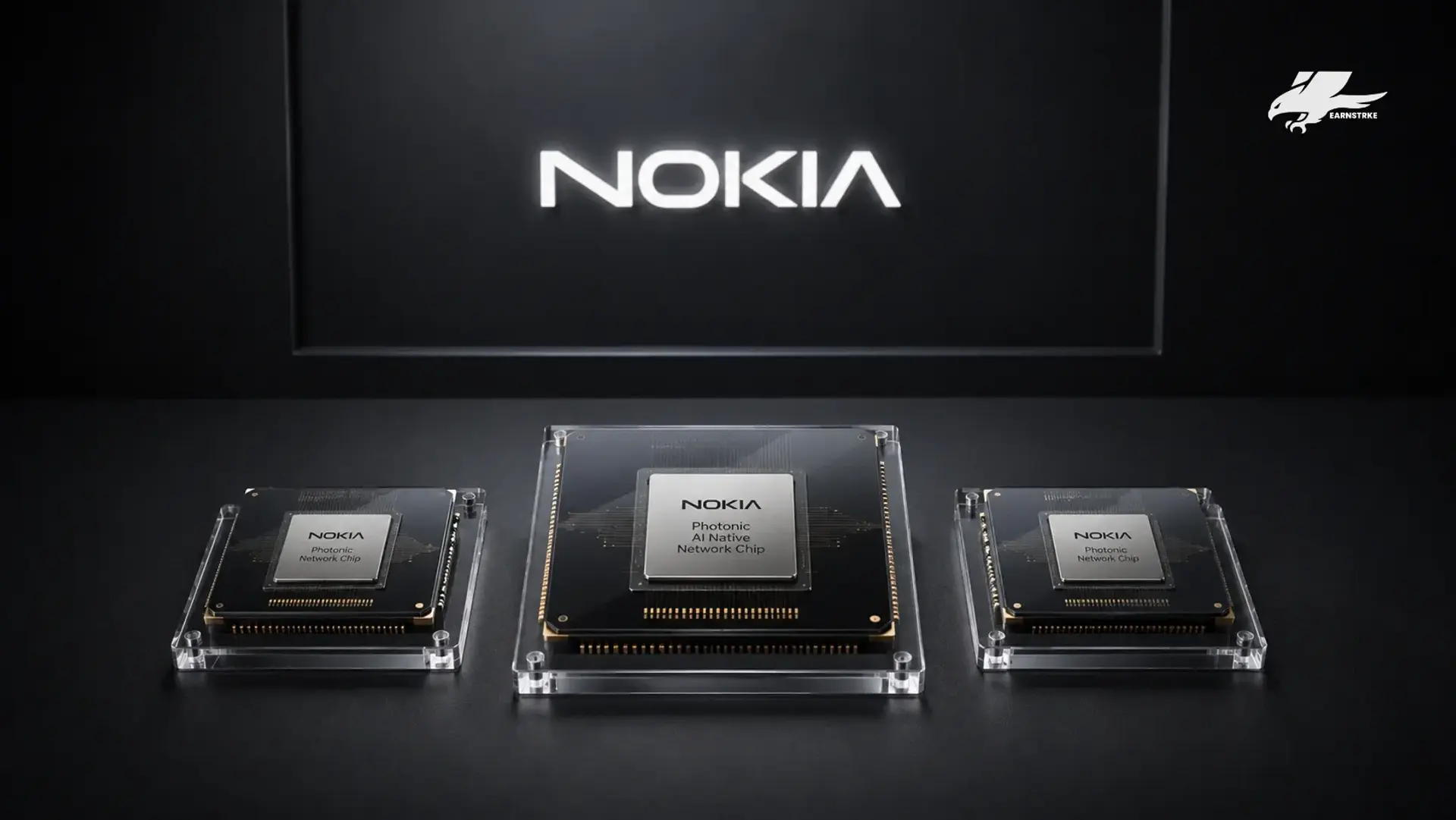
The second announcement is bigger in dollar terms. Nokia is expanding its advanced test and packaging operations in Allentown, Pennsylvania, increasing production capacity at that site by up to tenfold. The new capacity is expected to be commercially available by the end of the third quarter of 2026. The expansion will nearly double Nokia's Pennsylvania workforce to more than 500 jobs and is projected to generate over $500 million in economic impact over five years.
Why Does a Pennsylvania Chip Facility Matter for AI?
The Allentown plant doesn't make GPUs. It packages photonic chips, the components inside optical modules that let data centers move enormous volumes of data using light instead of electrical signals.
Here's the scarcity angle most coverage skips: less than 2% of global semiconductor advanced test and packaging happens on U.S. soil. Nokia's Allentown facility is one of only a handful in the country doing this specific work for AI and telecom infrastructure. That's not a minor supply chain detail. It means a meaningful slice of the optical hardware powering American AI data centers currently depends on capacity that barely exists domestically.
Nokia's optical technology can cut energy usage in AI communications by as much as 75%, according to the company. That matters because power, not chip supply, is becoming the binding constraint on AI data center buildouts. A network technology that moves the same data for a quarter of the electricity is a direct lever on that bottleneck.
The Allentown expansion isn't a standalone bet. It sits inside Nokia's broader, previously announced plan to invest $4 billion in U.S. R&D and manufacturing for AI-ready network connectivity. The Allentown piece alone includes about $30 million from Nokia, supported by roughly $4 million in Pennsylvania state assistance and about $10 million in federal CHIPS Act tax credits.
How Is This Showing Up in Nokia's Actual Numbers?
This isn't a story running ahead of the financials. Nokia's first-quarter 2026 results already show the AI shift landing in real revenue.
- Network Infrastructure sales grew 6% year over year on a constant-currency basis
- Optical Networks revenue grew 20%
- AI and Cloud customer sales grew 49% and reached 8% of group sales
- Nokia booked €1 billion in AI and Cloud orders during the quarter alone
Nokia also raised its own forecast for the AI and Cloud addressable market, now projecting a 27% compound annual growth rate from 2025 through 2028, up from a prior estimate of 16%. For full-year 2025, comparable net sales rose 4% to €19.9 billion, with comparable operating profit of €2.0 billion and free cash flow of €1.5 billion, a 72% conversion rate. Management is guiding for €2.0 to €2.5 billion in comparable operating profit for 2026, and as of the first quarter, Nokia said it's tracking above the midpoint of that range.
Is Nokia Actually Cheap Compared to Its Optical Peers?
Here's the valuation gap that doesn't get enough attention. Ciena trades at roughly 11.0 times forward revenue. Coherent trades at around 11.6 times. Nokia, selling optical networking gear into the same AI data center customers, trades at approximately 3.4 times forward revenue.
That's not a small discount. It's a different universe of multiple for companies competing in overlapping parts of the same supply chain. Part of that gap reflects Nokia's larger, more diversified business outside of optical networking. But it also suggests the market hasn't fully repriced Nokia's optical and AI-and-Cloud segments as growth assets in their own right, even as those segments now post the fastest growth rates inside the company.
The unique angle here: Nokia's AI-RAN program, which applies AI directly to radio access networks rather than just data center interconnects, already has 10 publicly committed customers and is on track to begin customer trials later in 2026. If that extends Nokia's relevance from data center plumbing into the wireless network edge, the optical comparison to Ciena and Coherent undersells what Nokia is actually building toward.
FAQ
What did Nokia announce in June 2026?
Nokia announced two infrastructure projects: a tenfold expansion of its photonic chip packaging facility in Allentown, Pennsylvania, and an upgrade to Symphony Communication's subsea cable network connecting Thailand, Malaysia, and Singapore. Both projects support the optical networking infrastructure that AI data centers depend on.
Why is advanced test and packaging important for AI chips?
Advanced test and packaging, or ATP, is the process of testing and assembling semiconductor components like photonic chips before they're used in optical modules. Less than 2% of this work happens in the U.S. today, making domestic ATP capacity a genuine supply chain bottleneck for AI infrastructure.
How much is Nokia investing in U.S. manufacturing?
Nokia's Allentown expansion is part of a broader $4 billion multi-year plan to invest in U.S. research and manufacturing for AI-ready network connectivity. The Allentown project specifically includes about $30 million from Nokia, plus state and federal incentives including CHIPS Act tax credits.
How fast is Nokia's AI and Cloud business growing?
Nokia's AI and Cloud customer sales grew 49% in the first quarter of 2026 and accounted for 8% of total group sales. The company booked €1 billion in AI and Cloud orders during the quarter and raised its long-term market growth forecast to a 27% compound annual rate through 2028.
How does Nokia's valuation compare to Ciena and Coherent?
Nokia trades at roughly 3.4 times forward revenue, compared to about 11.0 times for Ciena and 11.6 times for Coherent. All three companies sell optical networking equipment to AI data center customers, making the valuation gap a notable divergence among direct competitors in the same market.
Stock investments involve market risk and price fluctuations. This content is for informational purposes only and should not be considered investment advice. Please read our Disclaimer for more information.