Roundhill Memory ETF: A concentrated bet on the AI memory
This image is used under our Editorial Policy.
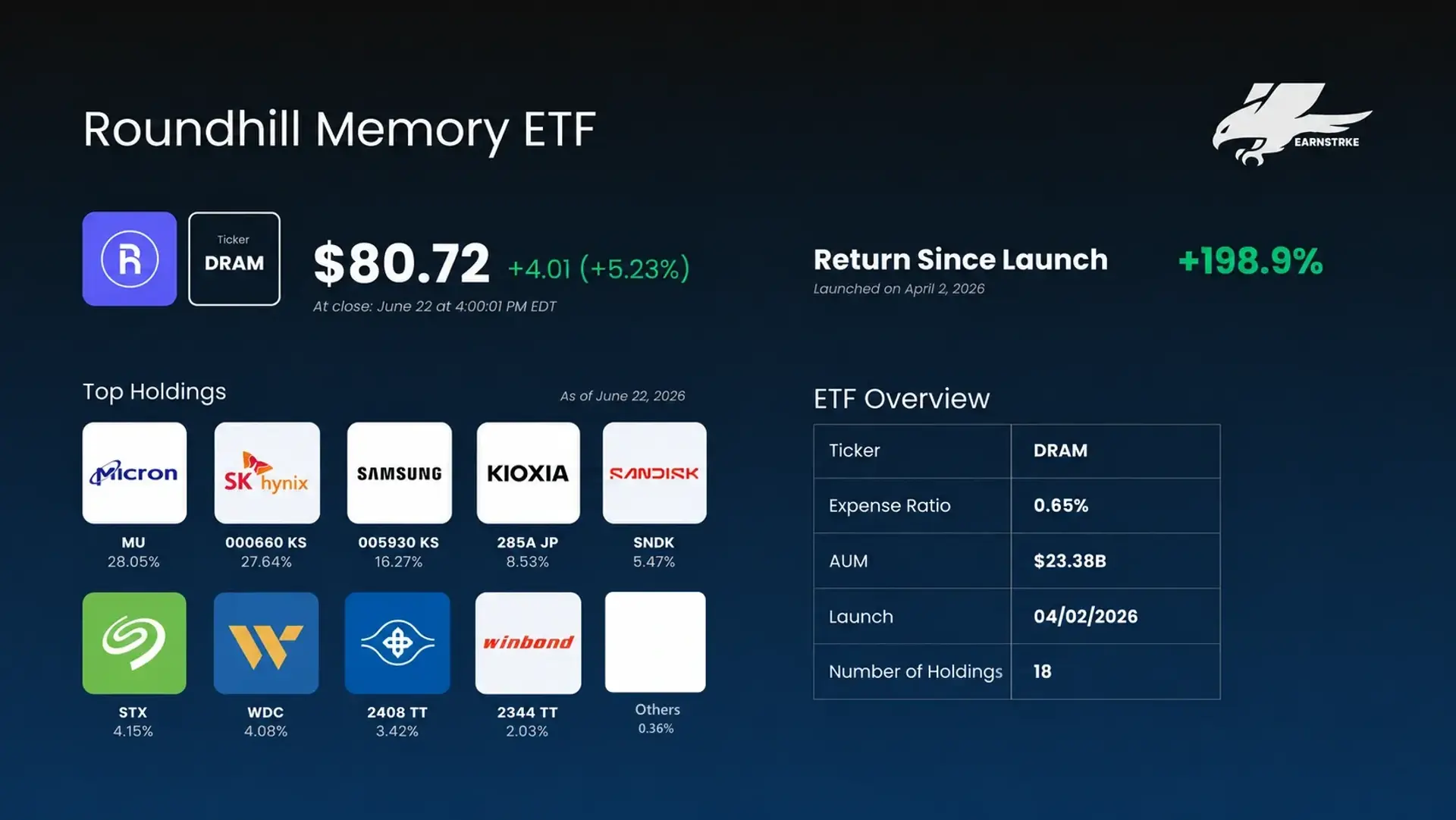
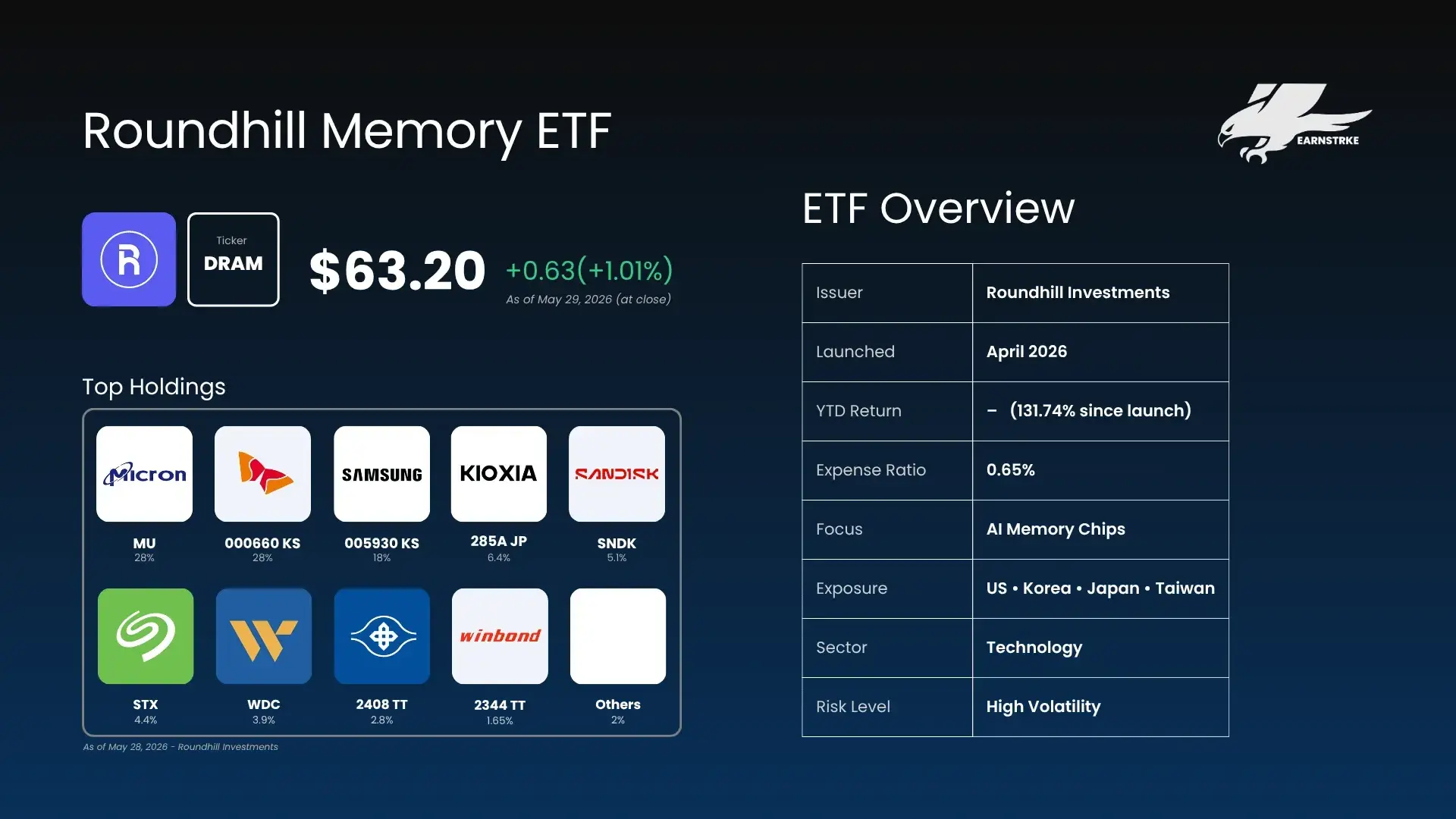
The Roundhill Memory ETF (DRAM) has quickly become one of the most talked-about thematic ETFs in the market. Launched in April 2026, the fund focuses on a narrow but increasingly important segment of the semiconductor industry: memory.
Unlike broad technology or semiconductor ETFs, DRAM is built around a simple idea. Artificial intelligence systems need enormous amounts of memory to operate, and only a handful of companies can supply the advanced memory products powering that demand.
That specialization has attracted significant investor attention. Within weeks of launch, the fund gathered billions of dollars in assets and became one of the fastest-growing ETFs ever introduced. The surge reflects growing confidence that memory has become one of the most constrained parts of the AI supply chain.
Why memory matters in the AI era
The current AI infrastructure race is often associated with companies designing graphics processors and AI accelerators. Yet those processors cannot operate effectively without advanced memory.
Modern AI systems rely heavily on high-bandwidth memory (HBM), a specialized form of DRAM that allows massive amounts of data to move quickly between processors and memory modules. As AI models become larger and data centers expand, demand for HBM has risen much faster than manufacturers can increase supply.
Building new memory capacity is neither quick nor cheap. Expanding production requires billions of dollars in capital spending, advanced fabrication facilities, and years of engineering expertise. As a result, only a small number of companies have the scale and technical capability to compete at the highest end of the market.
That supply constraint has translated into stronger pricing, higher margins, and rapidly growing earnings across the industry.
The fund's concentrated structure
DRAM is one of the most concentrated ETFs available in the semiconductor space. Its largest positions are Samsung Electronics, SK Hynix, and Micron Technology. Together, those three companies account for roughly three-quarters of the portfolio. The remaining holdings include memory and storage businesses such as Kioxia, Sandisk, Seagate, Western Digital, Winbond, and Nanya Technology.
The fund was designed to give investors direct exposure to memory pricing rather than the broader semiconductor industry. If HBM shortages persist and memory prices continue rising, the largest beneficiaries are likely to be the companies dominating DRAM's portfolio.
Strong industry conditions can boost performance, but the fund is also more vulnerable if memory pricing weakens or supply eventually catches up with demand.
Micron's rise to the center of the AI trade
Among the fund's holdings, Micron has become one of the clearest examples of how powerful the AI memory cycle has become.
The company reported fiscal first-quarter 2026 revenue of $13.643 billion, up 57% from a year earlier. Its Cloud Memory segment generated $5.284 billion in revenue with gross margins of 66%.
Micron has also benefited from exceptionally strong demand from hyperscale cloud providers building AI infrastructure. Orders for advanced memory products have stretched years into the future, giving manufacturers unusual visibility into future production requirements.
CEO Sanjay Mehrotra described the company's outlook this way:
"Our Q2 outlook reflects substantial records across revenue, gross margin, EPS and free cash flow, and we anticipate our business performance to continue strengthening through fiscal 2026."
The company's guidance called for gross margins around 68%, a level rarely sustained in the memory industry outside particularly strong cycles.
Investor enthusiasm has followed. Micron's market value recently crossed the $1 trillion mark, placing it among the largest technology companies globally.
Samsung and SK Hynix remain critical players
While Micron often receives attention from U.S. investors, Samsung Electronics and SK Hynix are equally important to the memory story.
Samsung remains the largest memory manufacturer in the world and continues to invest heavily in advanced memory technologies. Its scale gives it a major role in supplying AI infrastructure across global markets.
SK Hynix, on the other hand, has become especially important in the HBM segment. The company has established itself as one of the leading suppliers for advanced AI systems, and reports indicate that much of its production capacity is already committed through 2026.
Because DRAM allocates significant weight to both companies, investors gain exposure to regions where much of the world's advanced memory manufacturing is concentrated. South Korea alone represents nearly half of the fund's geographic exposure.
The opportunity and the risk
DRAM is designed to provide exposure to companies tied to memory pricing. If AI spending continues to expand, demand for advanced memory products could remain elevated for years. Rising prices, strong utilization rates, and continued capacity shortages would directly benefit the companies dominating the ETF.
At the same time, memory has historically been one of the most cyclical areas of the semiconductor industry. Periods of shortage have often been followed by periods of oversupply as manufacturers expand production.
That dynamic means investors are not simply betting on AI adoption. They are also betting that memory demand grows faster than new supply enters the market.
For now, the industry remains supply-constrained. The combination of long lead times, rising AI infrastructure spending, and limited competition among advanced memory producers continues to support the investment case.
What to watch
The central driver behind DRAM's performance remains demand for high-bandwidth memory used in AI infrastructure. Investors will be watching whether Samsung Electronics, SK Hynix, and Micron can expand production capacity without easing the current supply shortage. Micron's revenue growth, gross margins, and management outlook for fiscal 2026 will provide important more information about pricing conditions across the industry. A positive outcome would involve continued HBM shortages, sustained demand from hyperscale data centers, and strong earnings growth among the fund's largest holdings. Negative one would involve memory supply catching up faster than expected, putting pressure on pricing and profitability across the sector.
Stock investments involve market risk and price fluctuations. This content is for informational purposes only and should not be considered investment advice. Please read our Disclaimer for more information.