SpaceX Lists on Nasdaq: What Comes Next for Space Stocks?
This image is used under our Editorial Policy.
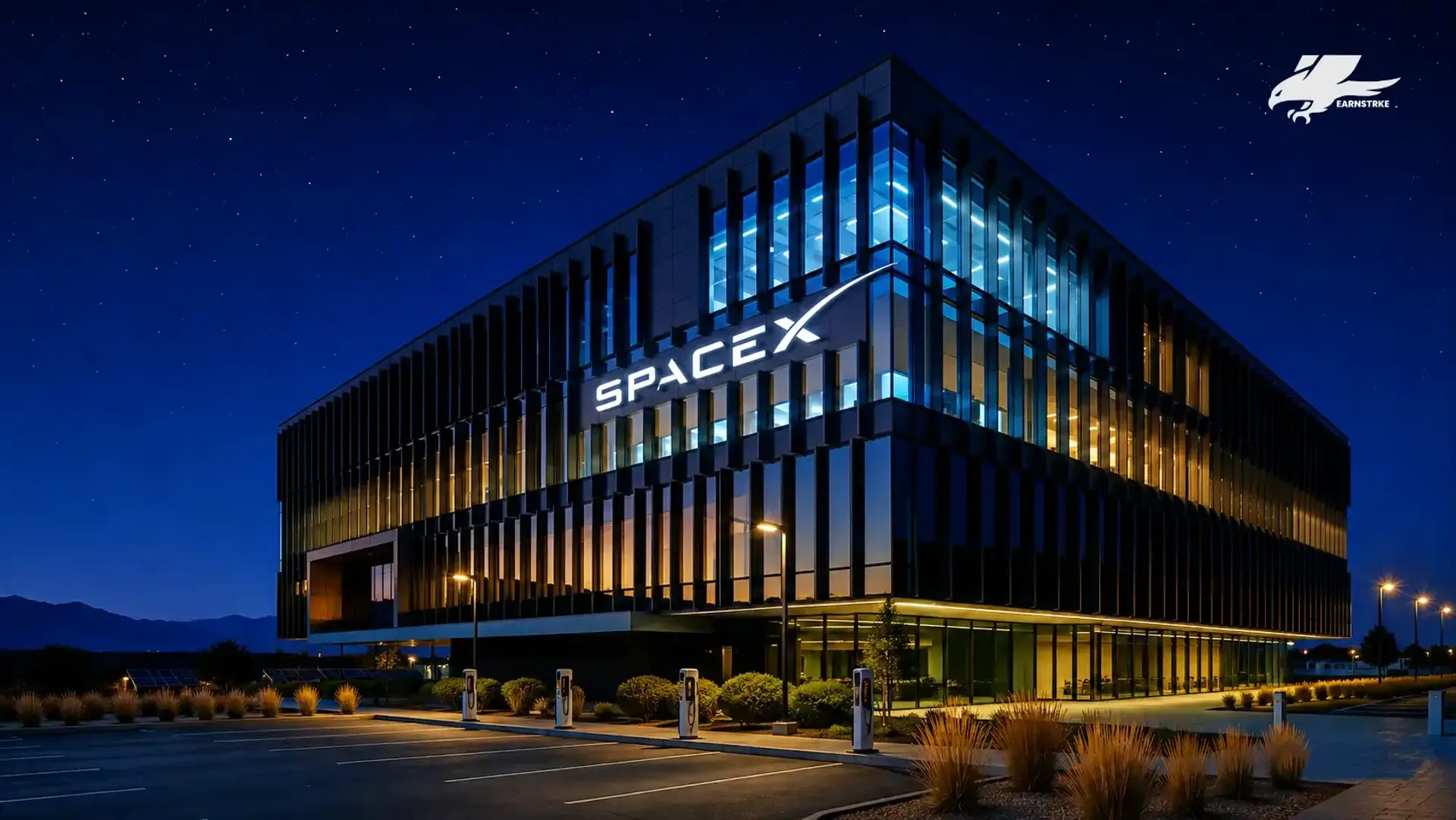
On Friday, June 12, 2026, SpaceX began trading on the Nasdaq under the ticker $SPCX, capping off the largest initial public offering in U.S. history. Elon Musk rang the opening bell from Texas. COO Gwynne Shotwell did the honors in New York. And somewhere between those two cities, the space sector as investors had known it for a decade quietly got rearranged.
The numbers alone are staggering enough to make even seasoned fund managers do a double-take. SpaceX raised $75 billion, pricing 555.6 million shares at $135 each. That values the company at $1.77 trillion — enough to land it as the seventh most valuable publicly traded company in the United States, surpassing Tesla, Musk's own electric vehicle company. The previous record holder, Saudi Aramco, raised $25.6 billion in its 2019 IPO. SpaceX didn't just beat that — it nearly tripled it.
The "Sell the Proxies, Buy the Leader" Effect
Here's the part that stung a lot of retail portfolios: SpaceX's debut was good news for SpaceX and, apparently, only SpaceX. Investors appeared to follow a classic playbook — dump the proxy bets, pile into the real thing — and the resulting carnage across the space sector was swift and painful.
By Friday afternoon, the damage across space-adjacent stocks looked like this:
- $SPCE — down 24% (Virgin Galactic)
- $ASTS — down 11% (AST SpaceMobile)
- $VOYG — down 10%
- $LUNR — down 10% (Intuitive Machines)
- $FLY — down 9%
- $RDW — down 9% (Redwire)
- $RKLB — down 8% (Rocket Lab)
- $BKSY — down 8% (BlackSky Technology)
- $PL — down 7% (Planet Labs)
- $SATS — down 6% (EchoStar)
For years, many of these companies served as the closest thing retail investors could get to a SpaceX position. Now that the real article is available, the proxies lost their appeal almost overnight. It's a textbook rotation, and it happened exactly as fast as you'd expect when $75 billion of capital is suddenly looking for a new home.
Musk's Opening Bell — and His Candid Admission
Whatever you think of Elon Musk, the quote he offered on a JPMorgan Chase livestream ahead of the IPO is worth sitting with for a moment.
"I gave SpaceX less than a 10% chance of succeeding at all. I told people this, I said, 'look, we're probably gonna fail, but you know, we should give it a try, because if we don't, if there's not a new company that enters space, we will never be a truly space-faring civilization.'"
It's the kind of line that sounds rehearsed until you consider the context — Musk has said versions of this since SpaceX's earliest days, well before anyone was writing trillion-dollar valuations on napkins. And it does land differently when the company that was "probably going to fail" has just completed the biggest IPO in American history.
Why Go Public Now?
The question a lot of people were asking ahead of Friday was simple: why now? SpaceX had been cash-flow positive since around 2015, according to Musk. It wasn't burning through runway. It didn't need to sell equity to survive. So what changed?
The answer, as Musk explained it, is ambition at a scale that even a highly profitable private company can't fund alone. The stated plans include:
- Deploying over 100,000 satellites into orbit for global communications
- Building AI data centers in space — an infrastructure play that most competitors haven't even begun to conceptualize
- Funding a broader "significant growth phase" across multiple divisions
This is not a company going public because it has to. It's a company going public because it has figured out that the next chapter of what it wants to build is simply too expensive to do quietly.
The Starlink Factor
Worth noting: the profitable engine inside SpaceX isn't rockets — it's Starlink. The satellite internet division is, right now, the only part of the business that's actually making money. Starlink has been growing aggressively, though analysts have flagged that expansion is getting incrementally harder as the easiest markets get absorbed. Investors buying into $SPCX are, in many ways, making a bet on Starlink's ability to keep scaling — and on whatever SpaceX becomes as its AI ambitions take shape.
The xAI Acquisition and SpaceX's AI Play
One of the more underreported angles heading into the IPO: SpaceX absorbed Musk's AI startup xAI back in February 2026. That deal brought in xAI's data centers, the Grok AI models, the Grok chatbot and image generator, and — notably — the social platform X, formerly Twitter. SpaceX is no longer just a rocket and satellite company. It is, formally and legally, also an AI company and a social media company. Whether that's a feature or a complication for institutional investors remains to be seen, but it's part of the story that $135 per share was pricing in.
The Numbers in Context: Just How Big Is This?
It's easy to throw around "record-breaking" and not really feel what it means. Here's a little context:
- Saudi Aramco's 2019 IPO raised $25.6 billion — adjusted for inflation, roughly $33.2 billion — and came with a $1.71 trillion market cap at the time
- SpaceX raised $75 billion, valuing itself at $1.77 trillion — and it's a company that has accumulated a total deficit of $41.3 billion since its founding in 2002
- Despite posting losses last year, SpaceX's revenues are multiples of many larger competitors
Shares were initially indicated to open between $170 and $175, well above the $135 IPO price. And within early trading on decentralized platforms, $SPCX was already breaking above $180 — a sign that demand, at least at the open, was running hotter than even the bankers expected.
What This Means for the Space Sector Going Forward
The honest answer is: we don't fully know yet. The short-term rotation out of space proxies is already playing out. The longer question is whether a publicly traded SpaceX becomes a rising tide that eventually lifts the sector — or whether it continues to vacuum up investor capital that might otherwise flow to smaller players.
What's hard to argue with is the moment itself. A company that Elon Musk privately gave a less than one-in-ten shot at survival is now worth more than all but six publicly traded companies in the United States. The opening bell rang, the shares started trading, and — for better or worse — the space economy just got a lot more interesting to watch.
Stock investments involve market risk and price fluctuations. This content is for informational purposes only and should not be considered investment advice. Please read our Disclaimer for more information.