Gold Jumps 3.7%, Silver 6% as Warsh Softens on Inflation
This image is used under our Editorial Policy.
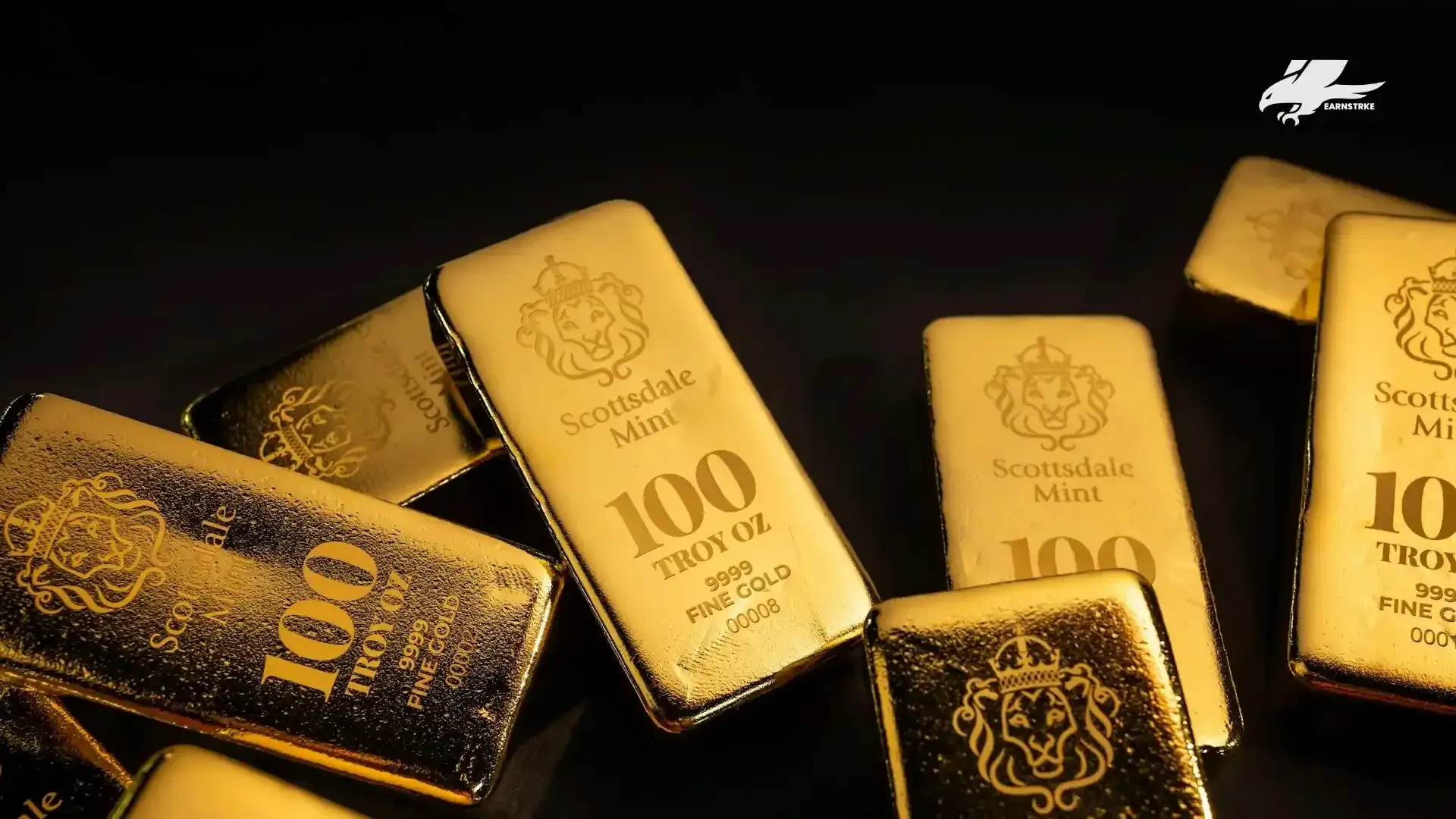
On July 1, 2026, Fed Chair Kevin Warsh told central bankers gathered in Sintra, Portugal that inflation expectations and inflation risks had both fallen over the prior four weeks, triggering an immediate $1.25 trillion rally across precious metals — gold adding roughly $1.05 trillion in market value and silver $200 billion within hours.
Two weeks ago, Warsh's first FOMC press conference sent gold down more than 2% in a single session. Nine Fed officials had just penciled in a rate hike by year-end, traders priced in a better than 90% chance of a hike by October, and the dollar hit a 14-month high. Precious metals don't like any of that. Then Warsh walked into the ECB's annual forum in Sintra and said something different. The market didn't wait for clarification.
What Did Warsh Actually Say at Sintra?
Speaking at the ECB Forum on Central Banking, Warsh said: "Expectations of inflation over the first four weeks of this period have come down, inflation risks have come down." He was careful to add that prices remain too high and the Fed's commitment to its 2% target is unchanged. But the shift in tone was enough. The same man who ran a hawkish June meeting just acknowledged the inflation picture is improving. That's all traders needed.
He also signaled that AI's role in driving down prices is being taken seriously at the highest level of the Fed. Warsh described the AI boom as "the most productivity-enhancing wave of our lifetimes" and said the committee had grown more open-minded about technology's disinflationary potential.
Why Did Gold and Silver React This Hard?
Gold and the Fed funds rate operate in near-perfect opposition. Higher rates strengthen the dollar and lift Treasury yields. Both make holding gold — which pays no interest — more expensive in relative terms. When Warsh softened his tone, the dollar pulled back and rate-hike bets faded. Gold filled that vacuum immediately.
Silver's 6% move is even sharper, and that gap matters. Silver is not just a monetary metal — roughly 60% of annual silver consumption goes into electronics, solar panels, and semiconductors. Data centers, AI infrastructure buildout, and the broader electrification wave create structural industrial demand that gold simply doesn't have. When macro tailwinds align with that industrial demand story, silver tends to overshoot gold on the upside.
- Gold's 2026 range: peaked at $5,589 in late January, fell to an intra-year floor of $4,170, now recovering past $4,100
- Silver: had its worst week relative to gold earlier in June, making today's 6% gap-fill even more significant
- The Silver Institute projects a sixth consecutive annual supply deficit in 2026
- Central banks bought 244 tonnes of gold in Q1 2026, buying through the correction rather than out of it
Is This a Trend Reversal or a One-Day Trade?
That question depends heavily on what happens next with inflation data. Warsh's Sintra comments cover "the first four weeks" of his tenure as chair — roughly mid-May through mid-June. The June CPI reading drops on July 10. If core CPI continues its month-over-month deceleration — it came in at 0.2% in May after 0.3% in April — the case for an October hike weakens significantly. That's the scenario that gives today's rally legs.
The opposing scenario is also live. Headline CPI is still running at 4.2% year-over-year, elevated primarily by energy prices tied to the Iran conflict. Warsh hasn't abandoned the hawkish framework; he's simply acknowledged that near-term inflation pressures are easing. Any reversal in oil or a hotter-than-expected jobs report on Thursday — ADP private payrolls came in at 98,000 for June, below the 110,000 forecast — and the rate-hike trade comes straight back.
"The recent fall in oil prices may help renewed, consistent central bank buying," said one economics advisor to a major European financial institution quoted in recent analysis, noting that lower energy prices remove one of the key barriers to gold resuming its uptrend.
What Are the Big Banks Saying About Gold's Price Target?
The institutional forecasts haven't shifted but are being cited more loudly after today's move.
- J.P. Morgan Research: gold at $6,000 per ounce by year-end, $6,300 possible in 2027
- UBS: gold at $5,200 over the next 12 months, citing robust central bank demand as the critical support pillar
- Goldman Sachs: pushed every 2026 rate cut forecast into 2027 — but that was before today's Sintra comments
The J.P. Morgan and UBS targets both depend on the same two variables: Fed policy direction and geopolitical stability. Today's Warsh comments nudged one of those variables in gold's favor for the first time since the June FOMC meeting.
FAQ
Why does the Fed's tone affect gold and silver prices?
Gold pays no interest or dividends. When the Fed signals higher rates, investors can earn more from Treasuries and the dollar strengthens, making gold less attractive. When rate expectations fall, that comparison flips, and gold becomes relatively more appealing to hold.
Why did silver jump more than gold today?
Silver has a double driver gold lacks: industrial demand. Around 60% of silver consumption goes into electronics, solar panels, and semiconductor manufacturing. When macro conditions improve alongside structural demand from AI and energy infrastructure, silver tends to outperform gold sharply in short-term moves.
Is the Fed actually going to cut rates this year?
As of July 1, market consensus is closer to "no cut" than at any point in recent months. Warsh said inflation risks have eased but prices remain too high. The next key data point is the June CPI print on July 10, which will either support today's rally or reverse it.
What is the World Gold Council and why does its data matter?
The World Gold Council is an industry body that tracks global gold demand and supply, including purchases by central banks. Its data is the primary source for institutional gold flow analysis. Central bank buying of 244 tonnes in Q1 2026 signals that sovereign buyers were accumulating on price weakness, which historically provides a price floor.
What does a "supply deficit" in silver mean for prices?
A supply deficit means global mining and recycling produce less silver than industrial and investment demand consumes in a year. The Silver Institute projects 2026 will be the sixth consecutive deficit year. Persistent deficits typically support higher prices over time as above-ground inventory is gradually drawn down.
What should I watch next to gauge where precious metals go from here?
Three things: the June CPI print on July 10, Thursday's official US jobs report, and any further comments from Fed officials in the weeks before the July 28-29 FOMC meeting. Warsh has said there will be no forward guidance, which makes each data release more volatile for gold and silver than in the Powell era.
Commodities markets can be volatile and affected by global events. This content is for informational purposes only and should not be considered investment advice. Please read our Disclaimer for more information.