Why 2x Leveraged ETFs Are Booming in 2026: Risks & Rewards
This image is used under our Editorial Policy.
- 2x leveraged ETFs have become one of the fastest-growing segments of the ETF market.
- They allow investors to gain amplified exposure to stocks, sectors and indexes without using a margin account.
- Popular products tied to companies such as Nvidia, Tesla, Palantir and Coinbase have attracted significant attention during the AI-driven market rally.
- While gains can be amplified, losses can also compound much faster than many investors expect.
- Understanding daily rebalancing and volatility drag is critical before using leveraged ETFs.
The Rise of the 2x ETF Era
A few years ago, leveraged ETFs were mostly niche products used by active traders. Today, they have become some of the most talked-about investment vehicles in the market.
The explosion of interest in artificial intelligence, semiconductor stocks, cryptocurrencies and high-growth technology companies has created the perfect environment for leveraged products to thrive. Investors increasingly want larger exposure to market moves without borrowing money directly or opening margin accounts.
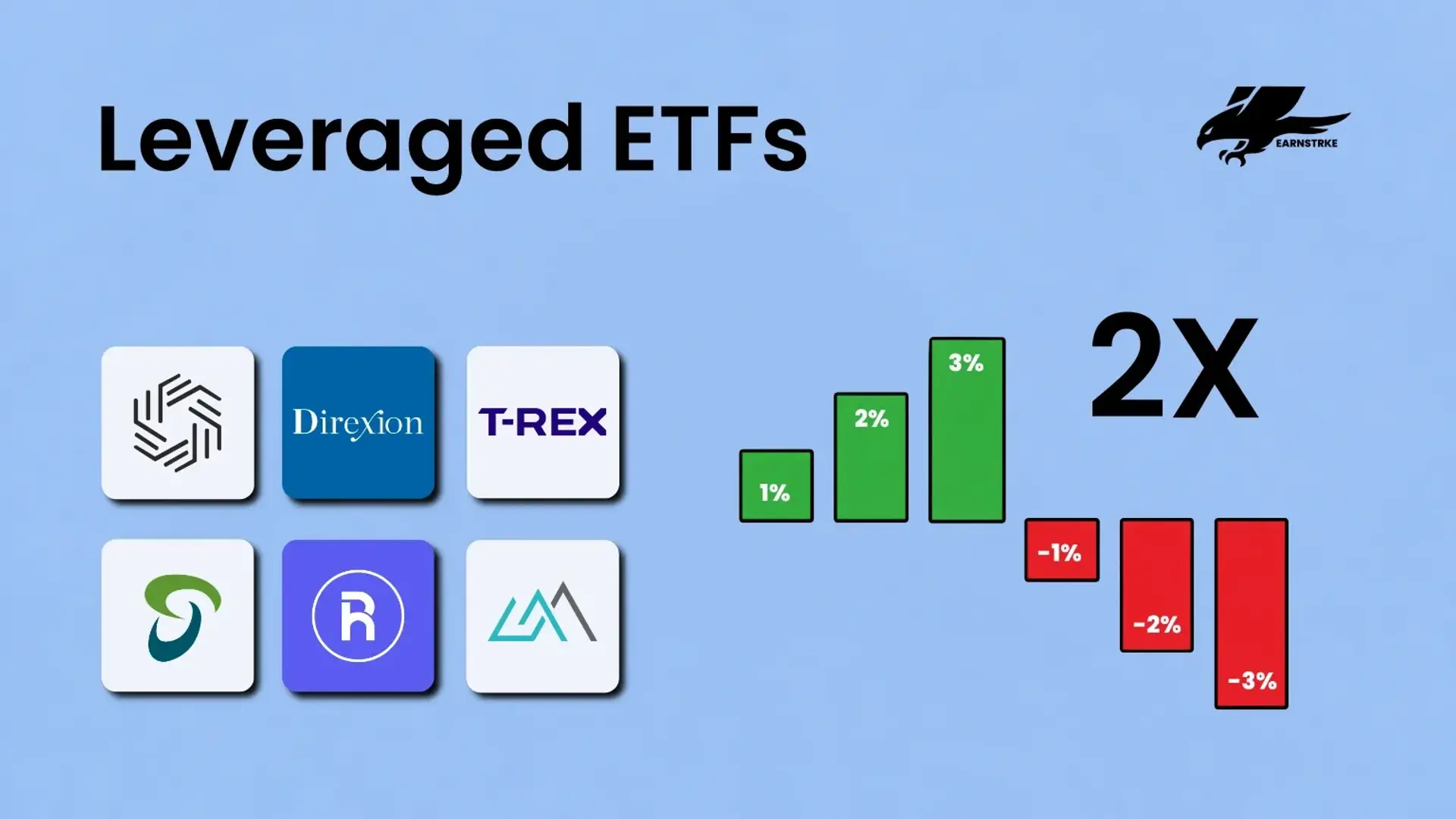
That's where 2x leveraged ETFs come in. These funds are designed to deliver twice the daily performance of an underlying asset. If the target stock gains 5% in a single day, a 2x ETF aims to gain approximately 10%. If the stock falls 5%, the ETF aims to lose around 10%.
The simplicity of the concept has attracted both experienced traders and newer investors looking for ways to increase potential returns. But behind the attractive headline numbers lies a structure that works very differently from traditional ETFs.
What Exactly Is a 2x Leveraged ETF?
At its core, a 2x ETF is designed to amplify daily price movements.
Unlike traditional ETFs that simply hold stocks, leveraged ETFs typically use financial derivatives such as total return swaps and other contracts to create additional exposure.
For example, a standard ETF tracking Nvidia might simply own Nvidia shares. 2x Nvidia ETF, however, uses derivatives to create exposure equal to roughly twice the daily movement of Nvidia stock. This means investors can effectively gain larger exposure without borrowing money themselves.
The appeal is obvious:
- No margin account required
- Easy to buy and sell like a stock
- Amplified exposure to popular companies
- Access through traditional brokerage accounts
For many traders, it feels like getting "more market" with the same amount of capital.
Why Are They Suddenly So Popular?
The AI Boom Created Perfect Conditions
The biggest driver behind the surge in leveraged ETF popularity has been the extraordinary performance of AI-related stocks.
Companies such as Nvidia, Broadcom, Palantir and Super Micro Computer have experienced periods of extreme momentum. During powerful uptrends, traders naturally look for ways to increase exposure.
A stock rising 3% or 4% in a single day can produce a 6% or 8% move in a 2x ETF. When these moves happen repeatedly, leveraged products attract enormous attention across social media, investing communities and financial media.
Investors Want Leverage Without Margin
Traditional leverage often requires borrowing money through a margin account.
That introduces additional complexity, interest costs and potential margin calls.
Leveraged ETFs package leverage into a simple exchange-traded product.
Investors can buy them the same way they purchase any other ETF.
This convenience has dramatically expanded their audience.
The Rise of Single-Stock Leveraged ETFs
The newest trend involves single-stock leveraged ETFs.
Instead of tracking an index like the S&P 500, these funds focus on individual companies.
Popular examples include products linked to:
- Nvidia
- Tesla
- Coinbase
- Palantir
- MicroStrategy
- Amazon
- Meta Platforms
These products allow traders to express highly concentrated views without using options or margin borrowing.
The result has been explosive growth in trading volumes.
The Secret Most New Investors Miss
Many people assume a 2x ETF simply delivers twice the return of a stock over time.
That is not how they work.
The critical phrase is:
Twice the DAILY return.
That single word changes everything.
Leveraged ETFs reset their exposure at the end of every trading day.
Each morning, the fund starts fresh with the objective of providing 2x that day's movement.
Over multiple days, returns can become very different from what many investors expect.
Why Daily Rebalancing Changes Everything
Imagine a stock rises 10% one day and falls 10% the next.
Starting value: $100
Day 1:
- Stock rises to $110
Day 2:
- Stock falls 10%
- Final value = $99
The stock is down only 1%.
Now look at a 2x ETF:
Day 1:
- ETF rises 20%
- Value becomes $120
Day 2:
- ETF falls 20%
- Value becomes $96
The ETF loses 4%.
Same stock.
Same two-day period.
Very different result.
This is the effect of daily rebalancing and compounding.
The Hidden Enemy: Volatility Drag
One of the most misunderstood concepts in leveraged investing is volatility drag.
Volatility drag occurs when repeated market swings slowly erode value.
Even if the underlying asset ends up flat, a leveraged ETF can lose money.
Consider a stock that repeatedly alternates between gains and losses.
The stock may ultimately go nowhere.
The leveraged ETF, however, experiences larger percentage moves each day.
Over time, those larger swings can gradually reduce the fund's value.
This effect becomes especially noticeable in:
- Sideways markets
- Choppy trading environments
- High-volatility periods
This is one reason leveraged ETFs often disappoint investors who hold them during unstable market conditions.
When Leveraged ETFs Tend to Work Best
Strong Trending Markets
Leveraged ETFs generally perform best when markets move consistently in one direction.
A sustained bullish trend allows gains to compound on an expanding base.
This can sometimes lead to returns that exceed a simple 2x multiple over a period of time.
Short-Term Conviction Trades
Many traders use leveraged ETFs when they have a strong short-term view on:
- Earnings announcements
- Economic reports
- Federal Reserve meetings
- Product launches
- Sector momentum
The goal is usually to capture a specific move rather than hold indefinitely.
Tactical Portfolio Positioning
Some investors use leveraged products as temporary tools to increase exposure during periods of unusually high conviction.
The emphasis is typically on tactical positioning rather than long-term ownership.
When Leveraged ETFs Can Become Dangerous
Sideways Markets
A market that moves up and down without a clear trend can create significant performance drag.
This is often where inexperienced investors become frustrated.
Long Holding Periods
Many people buy leveraged ETFs expecting them to behave like traditional investments.
Over weeks or months, compounding effects can create outcomes that differ dramatically from expectations.
High Volatility Environments
The larger daily swings, the more powerful the compounding effects become. This can work for investors during strong trends but can quickly become harmful during unstable markets.
Leveraged ETFs vs Traditional ETFs
- Investment Objective
- Traditional ETFs aim to track the performance of an underlying index, sector or asset.
- 2x leveraged ETFs aim to deliver approximately twice the daily return of the underlying asset.
- Use of Leverage
- Traditional ETFs typically do not use leverage.
- Leveraged ETFs use derivatives and other financial instruments to create 2x daily exposure.
- Typical Holding Period
- Traditional ETFs are often used as long-term investment vehicles.
- Leveraged ETFs are generally designed for short-term, tactical exposure.
- Volatility
- Traditional ETFs usually experience price movements similar to the assets they track.
- Leveraged ETFs amplify both gains and losses, resulting in higher volatility.
- Costs and Fees
- Traditional ETFs generally have lower expense ratios.
- Leveraged ETFs tend to charge higher fees due to leverage, derivatives and daily rebalancing requirements.
- Daily Rebalancing
- Traditional ETFs typically do not require daily leverage adjustments.
- Leveraged ETFs rebalance every trading day to maintain their target leverage ratio.
- Compounding Impact
- Compounding has a relatively small effect on traditional ETFs over time.
- In leveraged ETFs, compounding can significantly influence returns, especially during volatile market conditions.
Why They Continue to Attract Capital
Despite their complexity, leveraged ETFs continue to grow rapidly because they align with modern market behavior.
Today's market environment is increasingly driven by:
- AI enthusiasm
- High-growth technology stocks
- Social media-driven trading
- Shorter trading horizons
- Demand for amplified exposure
Investors are constantly searching for ways to maximize participation in major trends. Leveraged ETFs provide a straightforward mechanism for doing exactly that.
The Bottom Line
The popularity of 2x leveraged ETFs reflects a broader shift in how investors approach market exposure. They offer a simple way to amplify daily returns without using margin accounts, making them especially attractive during powerful market trends such as the ongoing AI-driven rally.
However, their structure is often misunderstood. Daily rebalancing, compounding and volatility drag mean that long-term results can differ significantly from what many investors expect. While these products can magnify gains during strong trends, they can also accelerate losses and erode value in volatile or sideways markets.
Ultimately, 2x ETFs are not simply "faster ETFs." They are specialized tools designed around daily performance objectives. Understanding how leverage, compounding and market volatility interact is essential for anyone looking to understand why these products have become so popular—and why they continue to generate both excitement and controversy across financial markets.
Source: Leverage Shares - Leveraged ETFs Explained: How They Work, Risks, and Benefits
The content on this page is provided for informational and educational purposes only and should not be considered financial or investment advice. Please read our Disclaimer for additional information.